
Operating System
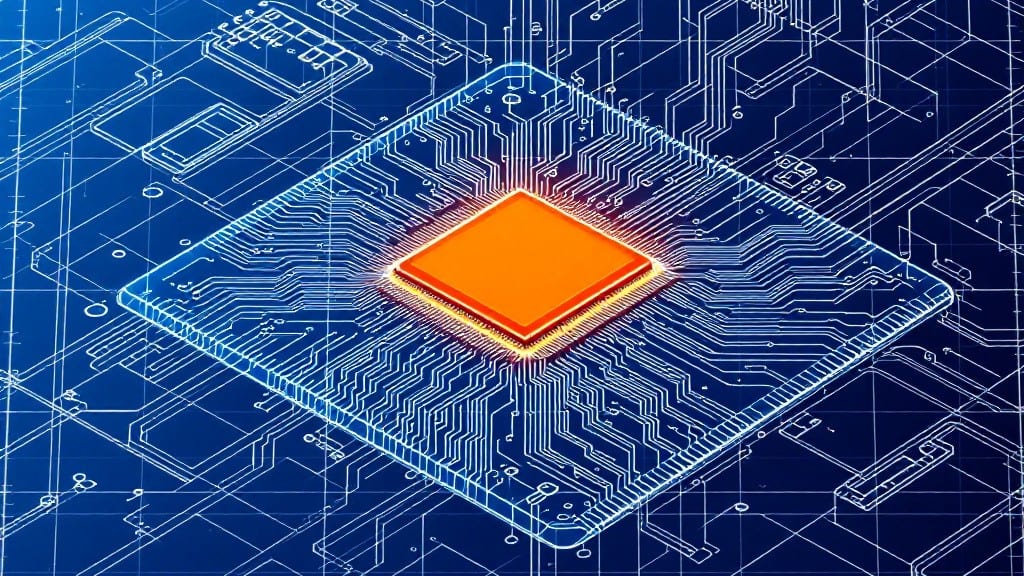
A GPU (graphics processing unit) on a computer is a specialized processor designed to handle rendering images, videos, and animations by processing multiple tasks simultaneously, making it far more efficient than a CPU for visual workloads like gaming, video editing, and 3D modeling.
A GPU isn't just for gaming—it's the backbone of modern visual computing. 💫 Think of it as a team of workers handling thousands of small tasks at once, while your CPU manages one complex job at a time.
This parallel processing is why GPUs excel at real-time effects like ray tracing in games or AI-powered video enhancements. Even tasks like photo editing and streaming benefit from a GPU's ability to crunch numbers faster than a CPU ever could.
What makes this especially useful is how GPUs handle specialized tasks like vertex shading (calculating 3D object positions) and pixel processing (determining colors).
In my early days rebuilding computers with my dad, we'd marvel at how a simple graphics card could turn a blank screen into a fully rendered 3D world—something that would've taken hours on a CPU alone.
💡 In This Article
- How GPUs Differ From CPUs in Processing Power
- Choosing the Right GPU for Your Needs
How GPUs differ from CPUs in processing power
At their core, GPUs and CPUs take fundamentally different approaches to processing tasks. A CPU (central processing unit) handles instructions sequentially, like a solo chef executing one complex recipe step at a time.
In contrast, a GPU contains thousands of smaller cores designed to handle the same task across multiple data points simultaneously—think of it as a kitchen with 100 sous-chefs all chopping onions for the same soup recipe at once.
This parallel architecture is why GPUs can render millions of pixels per second, while a CPU might struggle with just thousands.
The magic happens through specialized functions like vertex shading, where the GPU calculates the position and lighting of every 3D object vertex (corners and edges) in parallel.
For example, rendering a complex game scene with 10,000 polygons would overwhelm a CPU, but a modern GPU can process them all in milliseconds.
The GPU also excels at rasterization, converting these 3D shapes into 2D pixels on your screen, and pixel processing, determining colors and textures for each pixel—tasks that require massive parallel computation.
This architectural difference becomes especially visible in real-time applications. When you enable ray tracing in a game like Cyberpunk 2077, your GPU handles billions of light ray calculations per second to simulate realistic reflections and shadows. Without parallel processing, this would take minutes instead of milliseconds.
Similarly, AI upscaling technologies like NVIDIA's DLSS use the GPU's parallel power to enhance image quality in real-time by processing frames through neural networks—something a CPU would handle at a fraction of the speed.
Here's what this means for performance: A high-end GPU like the NVIDIA RTX 4090 can process 82 teraflops (trillions of floating-point operations per second), while even a powerful CPU like the Intel Core i9-14900K maxes out at around 1.2 teraflops for general computing.
The GPU's strength lies in its ability to divide complex visual tasks into thousands of identical subtasks, each handled by a different core—making it the ideal partner for any visually intensive workload.
What most people don't realize is how this parallel processing extends beyond gaming. In my early computer-building days, I'd watch GPUs handle video encoding at 10x the speed of CPUs, or accelerate machine learning tasks like training neural networks.
The same architecture that renders photorealistic 3D worlds also powers AI applications, scientific simulations, and even cryptocurrency mining—all because the GPU's design excels at repetitive mathematical operations across vast datasets.
The key takeaway is this: While CPUs optimize for sequential, complex decision-making (like running an operating system), GPUs specialize in parallel, repetitive calculations—making them the perfect co-processor for any task involving visual data.
This complementary relationship is why modern computers pair both processors, with the GPU handling the heavy lifting of graphics while the CPU manages everything else.