
Operating System
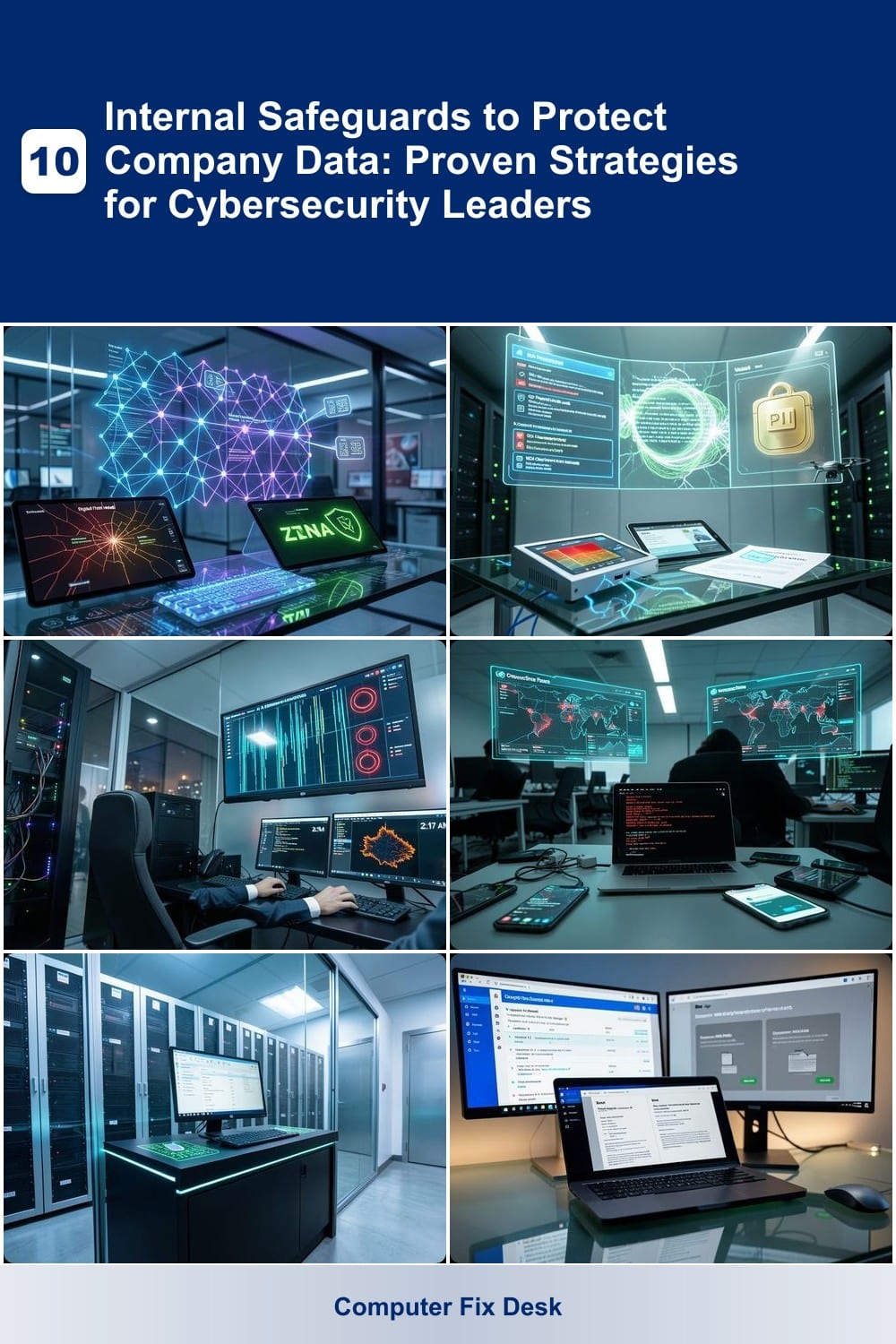
Data breaches cost businesses billions annually, but most cyberattacks exploit preventable internal vulnerabilities. These 10 proven safeguards empower cybersecurity leaders to fortify defenses before threats materialize, focusing on actionable strategies that integrate with existing workflows.
Zero Trust Network Access Implementation

Tired of relying on outdated "trust but verify" models that leave your network vulnerable? Zero Trust Network Access (ZTNA) flips the script by requiring authentication and authorization for every access request—no exceptions. This approach eliminates the implicit trust that lets attackers move laterally once they breach your perimeter.
With multi-factor authentication (MFA) and continuous device posture checks, ZTNA ensures only verified users and compliant devices access your resources. Solutions like Cloudflare Access or Zscaler Private Access integrate seamlessly with existing infrastructure, providing granular least-privilege access without sacrificing usability. For hybrid teams, this means secure remote access without VPN complexity or exposure.
Perfect for organizations embracing hybrid work, ZTNA is a game-changer for industries handling sensitive data—like healthcare or finance—where compliance demands rigorous access controls. 💪
Automated Data Classification and Tagging System

While Zero Trust focuses on access control, automated data classification takes protection further by automatically identifying and labeling sensitive information before it’s even accessed. This system uses AI-driven pattern recognition to flag PII, financial records, or trade secrets across emails, documents, and databases—reducing human error in compliance-heavy fields like healthcare or finance.
The best solutions integrate with existing workflows, applying real-time metadata tags (e.g., "Confidential," "HIPAA") that sync across platforms. For example, Microsoft Purview or Symantec Data Loss Prevention can classify 95%+ of sensitive data with minimal manual input, while tools like Varonis track access patterns to enforce granular permissions. These systems also generate audit trails for compliance reporting, cutting manual review time by up to 80%.
Ideal for organizations drowning in unstructured data, this safeguard is a game-changer for healthcare providers managing patient records or financial firms handling client data. It’s the difference between reacting to a breach and preventing one before it starts. ✨
Behavioral Analytics for Insider Threat Detection

Not all data breaches come from outside hackers—sometimes the biggest threats sit right inside your organization. Behavioral analytics uses AI to monitor user activity patterns, flagging suspicious behavior like late-night data transfers or unusual access requests before they escalate into full-blown incidents.
Solutions like Darktrace or Exabeam analyze baseline user behavior to detect anomalies in real time, such as a finance employee suddenly accessing HR files or a contractor downloading proprietary code. These systems integrate with existing SIEM tools and can reduce false positives by up to 80% through machine learning-driven context awareness.
Perfect for companies with high-value IP (think biotech, defense, or fintech), behavioral analytics ensures proactive protection without relying solely on reactive firewalls or access controls. 💻
Endpoint Detection and Response Deployment

When employees use personal devices or unmanaged endpoints, your network becomes a high-risk zone for ransomware and malware. Endpoint Detection and Response (EDR) solutions like CrowdStrike Falcon or SentinelOne deploy AI-driven threat hunting across all devices—even those outside corporate control—to stop attacks before encryption begins.
These platforms combine real-time behavioral monitoring, automated containment, and forensic investigation tools to identify and neutralize threats faster than traditional antivirus. For example, CrowdStrike’s 10-second detection time means ransomware like LockBit is blocked before it spreads. EDR also integrates with your existing SIEM for centralized visibility, making it ideal for organizations with BYOD policies or remote teams.
Ideal for mid-sized businesses to enterprises, EDR reduces dwell time by 90%—cutting recovery costs and reputational damage. 💻
Privileged Access Management Implementation

Ever wondered how financial institutions and government contractors prevent credential abuse before it becomes a breach? Privileged Access Management (PAM) solves this by restricting admin rights to only when and where they’re absolutely needed—eliminating standing credentials that attackers love to exploit.
With just-in-time (JIT) access, admins get temporary, time-bound elevation of privileges (e.g., 15-minute sessions for server updates) instead of permanent credentials. Solutions like CyberArk or BeyondTrust integrate with multi-factor authentication (MFA) and session monitoring to ensure even elevated access is secure. For compliance-heavy sectors, audit trails track every action, making it impossible to hide malicious activity.
This isn’t just for Fortune 500s—smaller firms handling sensitive data (like law firms or healthcare providers) benefit too. The key is balancing security with usability, so teams can work efficiently without sacrificing protection. 🌟
Secure Document Collaboration Platforms

Tired of chasing lost revisions or worrying about leaked drafts? Platforms like Box Sign and Dropbox Business replace risky email chains with end-to-end encrypted document sharing, complete with real-time version control and audit logs.
These tools integrate with your existing workflows—Microsoft 365, Google Workspace, or Adobe Creative Cloud—while enforcing role-based permissions (e.g., view-only for clients, edit access for internal teams). For legal teams, e-signatures with tamper-proof timestamps ensure compliance, while creatives benefit from collaborative annotation tools that track changes without exposing raw files.
Perfect for industries where intellectual property or client confidentiality is non-negotiable, these platforms turn collaboration into a secure, audit-ready process. ✨
Automated Patch Management System

If your IT team spends hours manually tracking patches across Windows, macOS, Linux, and even IoT devices, an automated patch management system could save you weeks of work annually. These systems don’t just schedule updates—they prioritize critical fixes, test them in staging environments, and deploy them across your entire infrastructure with minimal human intervention.
Modern solutions like ManageEngine Patch Manager Plus or SolarWinds Patch Management can deploy security patches within 48 hours of release, slashing the window attackers have to exploit known vulnerabilities. They support over 1,000 software titles, including niche applications, and integrate with your existing ticketing and monitoring tools. The best systems also offer rollback capabilities if a patch causes unexpected issues, ensuring zero downtime for your operations.
This safeguard is a game-changer for IT teams managing mixed environments—whether you’re juggling legacy systems, cloud workloads, or employee-owned devices. It’s the closest thing to a "set-and-forget" security measure for patching. ✨
Deception Technology for Threat Detection

When advanced attackers bypass traditional defenses, deception technology acts as a digital tripwire—creating fake databases, servers, or credentials to lure and trap intruders. Unlike reactive tools, these honeypot systems provide early warnings by alerting security teams the moment attackers engage with decoy assets.
Solutions like CrowdStrike Falcon Deception or Attivo Networks deploy low-interaction honeypots that mimic real systems but contain no production data. Attackers who interact with these decoys trigger automated alerts, revealing tactics like lateral movement or data exfiltration attempts. The best implementations integrate with SIEM tools for seamless threat investigation.
This approach is ideal for manufacturing firms with proprietary designs or research labs handling classified data, where traditional perimeter defenses may fail against targeted intrusions. By turning the tables on attackers, deception tech flips the script on breach prevention. ✨
Comprehensive Data Backup and Recovery Testing

Imagine discovering your critical business data is corrupted or missing—after a ransomware attack. The real test isn’t just having backups; it’s knowing they’ll restore flawlessly when needed. Quarterly restoration drills turn passive backups into a battle-tested safeguard against downtime.
This strategy goes beyond automated snapshots by simulating real-world recovery scenarios—verifying file integrity, system compatibility, and restore times under pressure. Tools like Veeam or Commvault automate these drills, while immutable storage (like WORM-compliant archives) prevents tampering. The goal? Minimize recovery time objectives (RTOs) to hours, not days.
Perfect for healthcare providers handling patient records or financial firms processing transactions—any organization where minutes of downtime equal lost revenue. Don’t assume your backups work until you’ve proven it. ⚡
Security Awareness Training with Phishing Simulations

Most cybersecurity tools focus on stopping attacks after they happen—but phishing simulations flip the script by turning employees into your first line of defense. With realistic attack scenarios (like CEO impersonations or fake invoice alerts), these programs train staff to spot red flags before they click, reducing successful phishing attempts by up to 70%.
Platforms like KnowBe4 or Proofpoint deliver automated, randomized tests that mimic current threat tactics, complete with customizable templates for your industry. Post-simulation reports highlight weak spots, letting you reinforce training where it matters most. The best part? It works for everyone—from interns to executives—because human error isn’t limited by job title.
This is the one safeguard that actually improves over time, as employees grow sharper with repeated exposure. Perfect for teams where "click here" emails are a daily reality. 💡